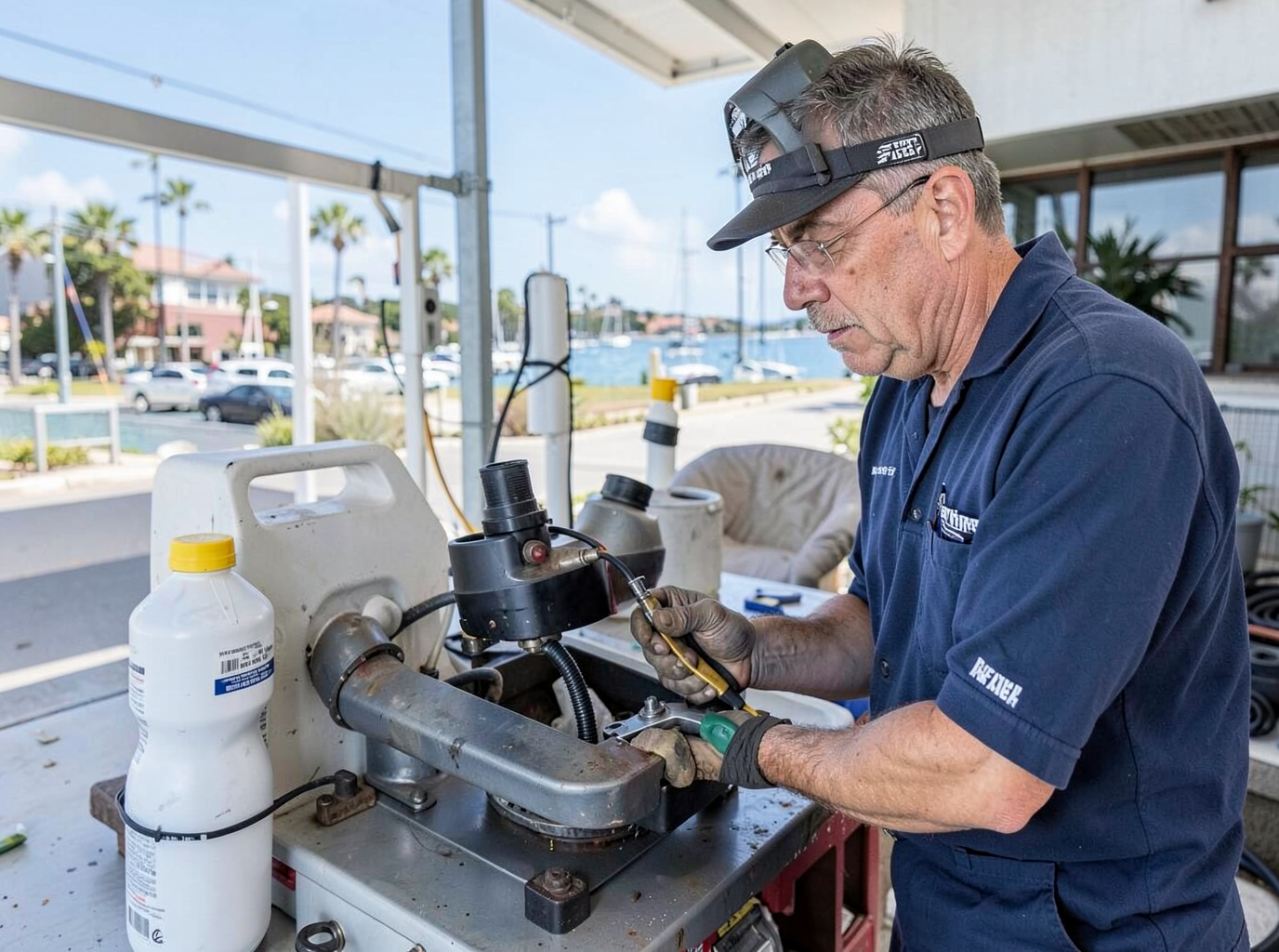
Newport Beach homes along the Balboa Peninsula and in Corona del Mar often sit within a few blocks of the ocean, where constant salt-laden air accelerates corrosion on condenser coils and service valves. Refrigerant leaks here frequently appear first at flare fittings or Schrader valves that have been exposed for twenty or thirty years. Technicians must isolate the circuit, perform a standing nitrogen pressure test, then introduce UV dye only after confirming the system holds pressure, because any residual moisture from the marine environment can create new leaks once the unit cycles again.
In neighborhoods near Fashion Island and Newport Coast, many refrigerators are built into custom cabinetry that limits airflow around the coils. Restricted airflow raises head pressure and forces the compressor to work harder, which can mask a slow leak until the unit loses all cooling. A proper repair includes checking the evaporator drain pan for salt residue, because pooled condensate mixed with sea air can pit aluminum coils from the inside out. After the leak is sealed, the system is evacuated to 500 microns before recharging to factory-specified ounces rather than topping off.
Orange County code requires proper recovery of any refrigerant before opening a sealed system. Coastal humidity also means that any opened lines must be capped immediately to prevent moisture ingress that later forms acid inside the compressor. Homeowners in Laguna Beach and Costa Mesa sometimes attempt DIY sealants; those products routinely fail within weeks because they cannot handle the temperature swings between mild days and cooler marine-layer nights.
Service calls in these zip codes routinely include a full inspection of the defrost heater and thermostat, since a defrost issue can mimic a refrigerant problem by icing the coil and driving pressures outside normal range.
Technician insight
In Newport Beach, the thing that catches most people out with Refrigerant Leak Repair is how quickly salt air pits flare nuts on 1970s and 1980s units tucked into Balboa Peninsula condos. Homeowners often notice the problem only after the unit has already lost several ounces, because the mild Mediterranean climate keeps the refrigerator running year-round without obvious seasonal spikes.
Slow leak on a built-in unit near Corona del Mar State Beach
The homeowner reported gradual warming in a 22-year-old side-by-side installed in a kitchen overlooking the water. Pressure testing revealed a pinhole at the evaporator inlet fitting corroded by years of salt exposure. The fitting was replaced, the system was evacuated and recharged, and temperatures stabilized without further loss.
Refrigerant Leak Repair Services We Offer
✓UV Dye Leak Detection
Circulate UV dye through the sealed system to pinpoint micro-leaks at coils and valves common in salt-air environments.
✓Evaporator Coil Seal Repair
Access and repair pinhole leaks on aluminum evaporator coils caused by condensate mixed with coastal humidity.
✓Condenser Valve Replacement
Replace corroded service valves and flare fittings that fail first on units installed near Newport Pier and Balboa Island.
✓Refrigerant Recovery and Recharge
Recover existing refrigerant per EPA guidelines, then recharge with exact factory ounces after leak resolution.
✓Compressor Line Set Inspection
Check and repair vibration-induced cracks in copper line sets routed through older tract homes in Costa Mesa and Irvine.
How it works
- 1
Initial Pressure Test
Connect nitrogen to the sealed system and monitor for pressure drop to confirm a leak exists before any refrigerant is handled.
- 2
Leak Location
Use electronic sniffers and UV dye to locate the exact point of escape, paying special attention to valves and coils exposed to ocean air.
- 3
Repair Execution
Brazed or mechanical repair is performed, followed by another nitrogen test to verify the fix holds.
- 4
Evacuation and Recharge
Pull the system to 500 microns, then recharge with the precise amount of refrigerant specified for the model.
- 5
Performance Verification
Run the unit through multiple cycles and confirm stable pressures and temperatures before leaving the home.
Pricing
Upfront quote provided after on-site diagnosis; cost depends on leak location and accessibility in built-in units.